
Children's Dentist in Racine
Trips to the dentist are just as important to your child's health as trips to the pediatrician. Equally important is to locate a children's dentist in Racine who has a good reputation for making their clients—both adults and children—comfortable and at ease during their visit.
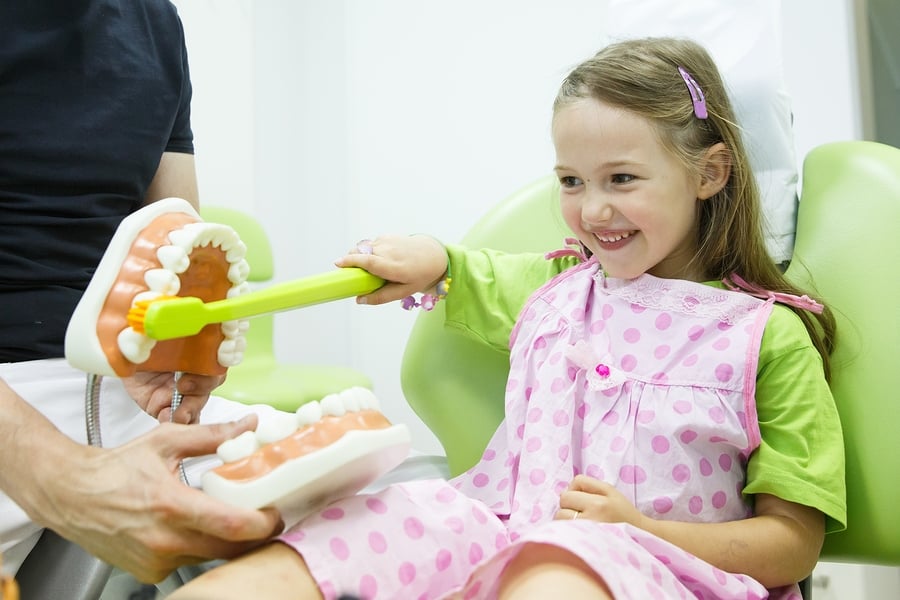
Parents love bringing their children and teenagers to Racine Dental Group. Our Pediatric Department is specially designed to give our young patients special attention and understanding–from our fun-filled play area to the modern treatment rooms. Our pediatric dentists and staff are trained to make children’s dental experiences comfortable and fun. They take the time to educate both children and parents about proper home care techniques and explain procedures in terms they can understand.
We often get asked what is the difference between a general dentist and a pediatric dentist? Pediatric dentists are specialists in treating the dental health of children. They are also referred to as the pediatricians of dentistry. A pediatric dentist has two years of specialty training beyond that of a general dentist and limits the practice to treating only children. Pediatric dentists focus on the oral health and unique needs of infants and children through adolescence. They specialize in the growth and development of children, both physically and psychologically, to handle each child’s dental needs.
The American Academy of Pediatric Dentistry along with The American Academy of Pediatrics recommends a child’s first dental visit be by 12 months of age. Generally our young patients stay with their pediatric dentist until they graduate from high school. The goal of early dental visits are to help prevent cavities before they need to be treated. At the Racine Dental Group Pediatric Department, we always emphasize and educate both children and parents about prevention, by using products such as fluoride, xylitol, MI paste, and dental sealants.
A positive initial visit to the dentist is essential to establishing good lifelong dental habits in your child. Our pediatric dentists have specialized in children's dentistry. That means that in addition to the education and training required to be licensed as a general dentist, they have spent at least two additional years of training in the specialty field of dentistry for children. Our pediatric dentists always do their best to meet the needs of their young dental patients.
At Racine Dental Group, we want to develop lifelong relationships with our patients of all ages, so many of our offices have pediatric dentists on staff. We can provide a positive dental experience for your child and tips on establishing good dental habits at home. Call Racine Dental Group in Racine to make an appointment or if you have questions.
When Should My Child Have Their First Dental Visit?
The American Academy of Pediatric Dentistry recommends that your child begin dental visits as soon as they have a tooth that has erupted, or not later than their first birthday. If a child has one tooth, they can develop a cavity. If two teeth abut, they should be flossed so that decay does not have a chance to develop.
It's common practice to put a child to bed with a bottle or sippy cup that contains juice, formula, milk, or sugar water, but we discourage the practice. All those liquids contain sugar that can lead to an issue called baby bottle tooth decay. That disease develops when the sugar remains on the teeth overnight and is serious because it affects the teeth. We recommend that you never put your child to bed with a bottle or sippy cup unless it only has water.
What Happens During My Child's First Dental Visit?
When you and your child arrive for your initial visit, your kid’s dentist will examine your child's teeth and jaw alignment to ensure there are no problems. We can perform the exam in the dental chair or on your lap. If your child needs X-rays, we'll take them but usually, children don't require X-rays.
The following are typical procedures for kid’s dental care in our office:
- Teeth cleaning: Your dentist and hygienist are adept at getting children to open wide for their teeth cleaning.
- Dental bonding:Bonding is a tooth-colored substance that can repair minor damage to teeth, such as chips and cracks.
- Dental Sealants: A sealant can prevent decay by sealing the back teeth so food and bacteria don't become trapped and start to decay. The sealant is a thin layer of plastic that has been approved by the FDA.
- Baby root canal: If your child has decay that has reached the inner, pulpy area of the tooth, then your children’s dentist can perform a baby root canal. This can alleviate pain and toothaches.
- Fluoride: Topical fluoride can strengthen tooth enamel and deter the onset of cavities and decay.
- Fillings: If your child has a cavity, your children’s dentist can remove the damaged area and replace it with an amalgam filling or a tooth-colored filling.
- Pediatric crowns: If your child's cavity is too large to repair, your children’s dentist can place a pediatric crown to protect and strengthen the damaged tooth. It will also restore functionality.
- Mouthguards: if your child is active in sports, the American Dental Association recommends they wear mouthguards to protect their teeth. This applies to all sports or athletic activities such as boxing, football, gymnastics, ice skating, hockey, and so forth. A mouthguard will protect the face and jaw and reduce the risk of having broken or loosened teeth, or getting teeth knocked out. We recommend a custom mouthguard because they're more effective than those purchased over the counter.
When Do Baby Teeth Appear?
Baby teeth usually begin to erupt at about 6 months, although it can be as early as 4 months or as late as a year.
When Do Baby Teeth Fall Out?
A child will usually begin developing permanent teeth around age 6, but it may be later. Usually, children will have all their permanent teeth by age 13.
If you have questions or want to schedule an appointment at Racine Dental Group, call us and we'll be happy to help you.
What Causes Toothaches in Children?
There are numerous reasons why your child may develop a toothache, such as:
- Decay:
If your child's toothache persists, decay is likely the reason. Your children's dentist in our office can repair the tooth and alleviate your child's pain. - Abscess:
If tooth pain has persisted and not been treated, your child may have developed an abscess. This is a serious condition and should be treated without delay. - Gum disease:
If your child has developed gum disease, they may also have a toothache, so make an appointment without delay. Gum disease can be cured in its early stage, but if it develops into periodontal disease, it can only be treated. It can't be cured. - Cracked enamel:
If your child's tooth enamel is cracked, it can cause a toothache, so make an appointment with your children's dentist in our office. - Stuck food:
Your child may have food stuck between their teeth, which can cause a toothache.
Call our Racine office to make an appointment if your child experiences recurring toothaches.
If you're still searching for a “children’s dentist near me”, call our office in Racine. We're proud of our reputation and service in dentistry for kids that we're sure you'll become part of our long-lasting extended dental family.
Dental Treatment Options
Our practice can provide a wide range of dental services for your children. Our flexibility in our services saves you time and keeps your total dental care within one practice. Our emphasis is on total preventive care for our patients. Total care begins with regular hygiene visits, regular checkups and continued home oral health routines.
We provide many preventative measures to keep your child’s teeth clean and healthy, including sealants and fluoride treatments. We also educate the parents in early detection of some common problems children may face, including thumb sucking, bruxism and baby bottle tooth decay.
Modes of Treatment Available:
- Behavior management and modification
- Nitrous oxide
- Oral Sedation
- General Anesthisia
Behavior Management and Modification
Sometimes children are uncooperative when trying to examine, clean, or fix their teeth. When a child is uncooperative, the pediatric dentist has many different tools and techniques to help manage this challenging behavior. Here is a list and description of some for the most common techniques that the pediatric dentist will use:
Tell, Show, Do: This is technique is used to explain every procedure to the child and
Click here for an article on behavior management from Children’s Hospital of Wisconsin.
Nitrous Oxide
Often children are given nitrous oxide, or what some know as laughing gas, to relax a child for their dental treatment. The American Academy of Pediatric Dentistry, recognizes this technique as a very safe, effective technique to use for treating children’s dental needs. The gas is mild, easily taken, and quickly eliminated from the body prior to departure. While inhaling nitrous oxide/oxygen, your child remains fully conscious and keeps all natural reflexes.
Prior To Your Appointment:
- Please inform us of any change to your child’s health and/or medical condition.
- Tell us about any respiratory condition that makes breathing through the nose difficult for your child. It may limit the effectiveness of the nitrous oxide.
- Let us know if your child is taking any medication on the day of the appointment.
Conscious Sedation
Conscious Sedation is recommended for very young or apprehensive children. It is used to reduce the anxiety or discomfort associated with dental treatments. Your child may be quite drowsy, and may even begin to drift to sleep, but they will not lose consciousness.
There are a variety of effective medications that can be used for conscious sedation. The doctor will prescribe the medication best suited for your child’s overall health and dental treatment recommendations. We will be happy to answer any questions you might have concerning this procedure.
Prior To Your Appointment:
- DIET: Do not feed your child ANYTHING (including water or other liquids) after midnight prior to the procedure. This is for your child’s safety.
- ILLNESS: If your child develops a fever, cold, or other illness within (7) days prior to the day of treatment, please call us. It may be necessary to reschedule the appointment.
- You must tell the doctor of any drugs that your child is currently taking, any previous drug reactions, and any change in medical history.
- Please dress your child in loose fitting, comfortable clothing.
- Please make sure that your child goes to the bathroom immediately prior to arriving at the office.
- The child’s parent or legal guardian must remain at the office during the complete procedure. No other siblings should accompany you at this appointment.
- Please watch your child closely while the medication is taking effect. Hold them in your lap or keep them close to you.
After the Sedation Appointment:
- Your child will be drowsy and will need to be monitored very closely. It is best to have a second adult present to assist transporting patient home.
- ACTIVITY: Your child should be kept indoors and activity restricted for the rest of the day. Allow your child to rest and closely supervise any activity for the remainder of the day.
- PAIN: Some discomfort may occur. This can usually be managed with Tylenol every 3-4 hours or Motrin every 4-6 hours as needed.
- DIET: Encourage your child to drink plenty of fluids in order to prevent dehydration. The first meal should be light and easily digestible.
- NUMBNESS: If your child’s lips, cheeks and tongue are numb they should be watched closely for the next two (2) hours. DO NOT allow your child to chew foods until all the effects of the numbness have gone away.
- TEMPERATURE ELEVATION: Your child’s temperature may be elevated to 101°/38°C for the first 24 hours after treatment. Tylenol every 3-4 hours OR Motrin every 4-6 hours and fluids will help alleviate this condition.
- Please call our office for any questions or concerns that you might have.
Outpatient General Anesthesia
Outpatient General Anesthesia is recommended for apprehensive children, very young children, and children with special needs that would not work well under conscious sedation. General anesthesia renders your child completely asleep. This would be the same as if he/she was having their tonsils removed, ear tubes, or hernia repaired.
This is performed in a hospital or outpatient setting only. While there are assumed risks, the benefits of treatment in this manner have been deemed to outweigh the risks. Most pediatric medical literature places the risk of a serious reaction in the range of 1 in 25,000 to 1 in 200,000, far better than the assumed risk of even driving a car daily. The inherent risks if this is not chosen are chronic dental pain or swelling, multiple appointments, or potential for physical restraint to complete treatment. The risks of NO treatment include tooth pain, infection, swelling, the spread of new decay, damage to their developing adult teeth and possible life threatening hospitalization from a dental infection.
Prior To Your Appointment:
- DIET: Do not feed your child ANYTHING (including water or other liquids) after midnight prior to the procedure. This is for your child’s safety.
- PHYSCIAL EXAMINATION: Is required prior to a general anesthesia appointment. This physical examination provides information to ensures the health of your child and the safety of the general anesthesia procedure.
- ILLNESS: If your child develops a fever, cold, or other illness within (7) days prior to the day of treatment, please call us. It may be necessary to reschedule the appointment.
- You must tell the doctor of any drugs that your child is currently taking, any previous drug reactions, and any change in medical history.
- Please dress your child in loose fitting, comfortable clothing.
- The child’s parent or legal guardian must remain at the hospital or surgical site waiting room during the complete procedure. No other siblings should accompany you at this appointment.
- PRIOR TO SURGERY: Minimal discussion to your child about the appointment will reduce the anxiety. Explain they are “going to go to fall asleep and when they wake up their teeth will be fixed.”
After the General Anesthesia Appointment:
- Your child will be drowsy and will need to be monitored very closely. It is best to have a second adult present to assist transporting patient home.
- ACTIVITY: Your child should be kept indoors and activity restricted for the rest of the day. Allow your child to rest and closely supervise any activity for the remainder of the day.
- PAIN: Some discomfort may occur. This can usually be managed with Tylenol every 3-4 hours OR Motrin every 4-6 hours as needed.
- DIET: Encourage your child to drink plenty of fluids in order to prevent dehydration. The first meal should be light and easily digestible.
- NUMBNESS: If your child’s lips, cheeks and tongue are numb they should be watched closely for the next two (2) hours. DO NOT allow your child to chew foods until all the effects of the numbness have gone away.
- TEMPERATURE ELEVATION: Your child’s temperature may be elevated to 101°/38°C for the first 24 hours after treatment. Tylenol every 3-4 hours OR Motrin every 4-6 hours and fluids will help alleviate this condition.
- Prior to leaving the hospital or outpatient center, you will be given a detailed list of “Post-Op Instructions” and an emergency contact number if needed.
Ready to book an appointment?
Book a consultation today or make an appointment using our convenient online appointment scheduler.
Book appointment
Enjoy the flexibility of paying through monthly payments.
CareCredit is a healthcare credit card designed for your health and wellness.
Learn more