
Gum disease is an infection of the tissues surrounding and supporting your teeth. It is caused by a bacterial plaque that creates toxins, which can damage the gums. Bleeding gums are a major warning to the possibility of tooth loss, and we need to address that right away. Racine Dental Group treats gum disease with a multi-faceted approach that includes antibiotics, deep scaling, mouth rinses and surgery if necessary
Choose from the following links to find out more about:
Book an Appointment Call Us (262) 637-9371
Periodontal disease is a bacterial gum infection that destroys the attachment fibers supporting bone that hold your teeth in your mouth. The main cause of these diseases is bacterial plaque, a sticky, colorless film that constantly forms on your teeth. If plaque is not removed, it can turn into a hard substance called calculus in less than two days. Calculus can only be removed during a professional cleaning. If calculus forms below the gum line on the root of the tooth, it makes plaque removal more difficult, leaving you at risk for periodontal disease.
Toxins (poisons) produced by the bacteria in plaque irritate the gums, causing infection. These toxins also can destroy the supporting tissues around the teeth, including the bone. When this happens, gums separate from the teeth, forming pockets that fill with even more plaque and more infection. As the disease progresses, these pockets deepen, more gum tissue and bone are destroyed, and the teeth eventually become loose. If periodontal disease is not treated, the teeth may need to be removed. There are many forms of periodontal diseases. The most common ones include:
Gingivitis
The mildest form of the disease, gingivitis causes the gums to become red, swell and bleed easily. There is usually little or no discomfort at this stage. Gingivitis is reversible with professional treatment and good home care.
Mild Periodontitis
Gingivitis, if left untreated, can advance to periodontitis. In the mild stage, periodontal disease begins to destroy the bone and tissue that support the teeth.
Moderate – Advanced Periodontitis
In the mid-stages, periodontal disease can lead to more bone and tissue destruction. The most advanced form of the periodontitis includes extensive bone and tissue loss. Teeth often become loose and may have to be removed.
How Is Periodontal Disease Treated?
Once your periodontal health is evaluated, our periodontist will determine the best treatment options to arrest the disease process and restore your gums and supporting bone to a healthy state.
Treatment can vary widely. If the disease is caught early, simple procedures are performed that will remove the plaque and calculus from below the gum line and eliminate the infection causing bacteria. More advanced disease will require more extensive therapy. Treatment techniques are now available that can restore lost bone and gum tissue. With the patient’s participation, we can restore a youthful smile that is pleasing in appearance and free of infection.
Scaling and Root Planing
Most patients with periodontal disease will require a special “deeper” cleaning called scaling and root planing. Scaling and root planing removes plaque and tartar from below the gum line. This controls the growth of destructive bacteria. It also helps the gums to reattach to the root of the tooth. Because the procedure is performed beneath the gum line, your gums will be numbed for your comfort. Two to four visits may be necessary to the complete the treatment. You can expect some minor soreness after the treatment.
Periodontal Plastic Surgery
“Gum recession” many years ago was thought to be a natural consequence of aging. Hence the expression, “long in the tooth.” Recession can occur for a variety of reasons. Make no mistake, it is not normal and can result in root cavities, sensitive teeth, an unsightly smile and tooth loss.
Lost gum tissue can be restored and give you back a beautiful smile.
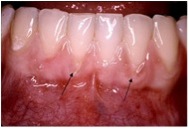 Before: note areas of recession | 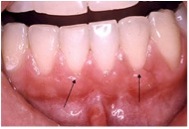 After: Note areas of root coverage |
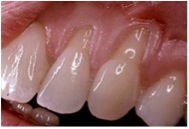 Before: Severe Recession | 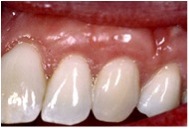 After: 1 month of healing, complete root coverage |
In many cases, it may be possible to restore lost periodontal supporting bone. This is accomplished by a combination of procedures. Osseous Grafting using a variety of graft materials may be used to stimulate the body’s ability to grow bone. Guided Tissue Regeneration is also employed to restore not only the missing bone, but also the periodontal ligament and cementum. These structures are necessary to restore the attachment of the bone to the root of the tooth.
After the infected root of the tooth is exposed, The periodontist carefully cleans the root of the tooth to remove all bacteria and toxic material that would prevent the regrowth of healthy tissue and bone. To allow the slow growing healthy tissues a chance to regrow, Dr. the periodontist Over the next few months, the body will slowly absorb the barrier material. New healthy tissue, firmly attached to the root surface remains behind. Sometimes a bone replacement material may be placed to enhance the bone growing potential. Successful treatment can be verified with x-rays in several months.


